How an Outdoor Fireplace Anchors the Gathering Space and Extends the Season on the Front Range
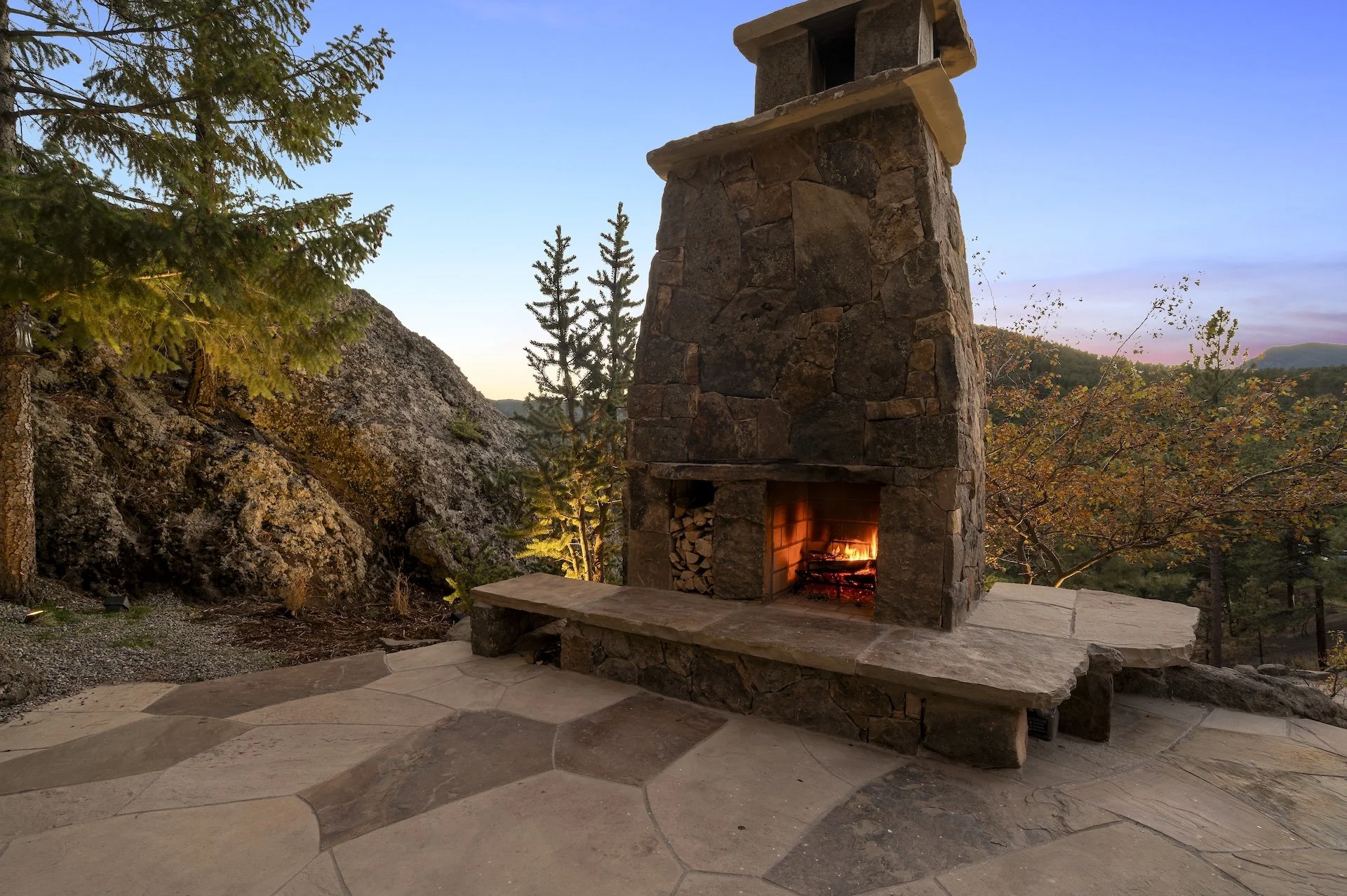
The fire pit is casual. It is a circle of chairs, an open flame, and the wind deciding who gets the smoke. The outdoor fireplace is architectural. It has a face, a hearth, a chimney, and a presence that anchors one end of the outdoor living space the way an indoor fireplace anchors a great room. And on the Front Range, where the evening temperatures drop fast once the sun clears the mountains and the outdoor season extends well into October for anyone willing to sit near a flame, the outdoor fireplace is the feature that keeps the backyard relevant long after the pool cover goes on.
Related: How an Outdoor Fireplace & Patio in Superior, CO, Work Together to Create Comfortable Outdoor Living
What an Outdoor Fireplace Adds to the Space
The heat is the practical benefit. The design impact is the one most homeowners underestimate until the fireplace is built.
An outdoor fireplace delivers:
A vertical focal point that gives the gathering area a center of gravity and an orientation that horizontal features cannot provide
A chimney that directs the smoke upward and away from the seating, solving the wind shift problem that makes open fire pits unpredictable
A hearth surface that radiates warmth and provides a shelf for display or casual gathering
A masonry or stone face that adds architectural weight and coordinates with the home's exterior, the retaining walls, and the patio material
A structure that can support a mounted television, flanking seating walls, or integrated wood storage that extends the fireplace into a full entertainment wall
These elements create a destination within the outdoor space. The seating orients toward the fireplace. The evening has a center. And the gathering holds together rather than drifting.
Related: Transform Your Backyard with a Pavilion and Outdoor Fireplace in Superior, CO
How the Front Range Climate Shapes the Build
An outdoor fireplace on the Front Range needs to handle UV at altitude that degrades mortar and finishes faster than at sea level. Temperature swings of 50 degrees in a single day that stress every joint. The hail that punishes the chimney cap and the hearth surface. And the expansive clay beneath the footing that moves with every moisture cycle.
The footing should extend below the 36-inch frost line and be sized for the weight of the masonry above it and the movement of the clay beneath it. The firebox should be lined with fire rated brick or refractory panels. The chimney should be capped to prevent rain and debris intrusion. And the stone or the veneer should be specified for the UV and the freeze thaw that the altitude delivers.
Gas and wood burning options each serve different lifestyles. Gas provides instant on, adjustable flame, and no ash. Wood provides the crackle, the scent, and the experience that gas cannot replicate. The choice is personal. The build needs to accommodate whichever fuel the homeowner selects.
The Feature That Frames the View and the Evening
There is a version of a Friday evening in Golden where the sun drops behind the foothills, the temperature falls into the low fifties, and the outdoor fireplace is the reason the family stays outside instead of moving in. The stone radiates warmth. The chimney carries the smoke straight up. The mountains are visible beyond the flame. And the evening, which would have ended an hour ago without the fire, continues as long as anyone wants it to.
That is the return on an outdoor fireplace. If your property is ready for the feature that anchors the gathering space and extends the season, the design conversation starts with the stone, the fuel, and the view.
Related: Elevate Your Breckenridge, CO Backyard: Retaining Wall & Fire Pit Ideas for Colorado Mountain Homes