How Landscape Design Works When the Climate Will Not Cooperate With a Generic Plan in Golden, CO
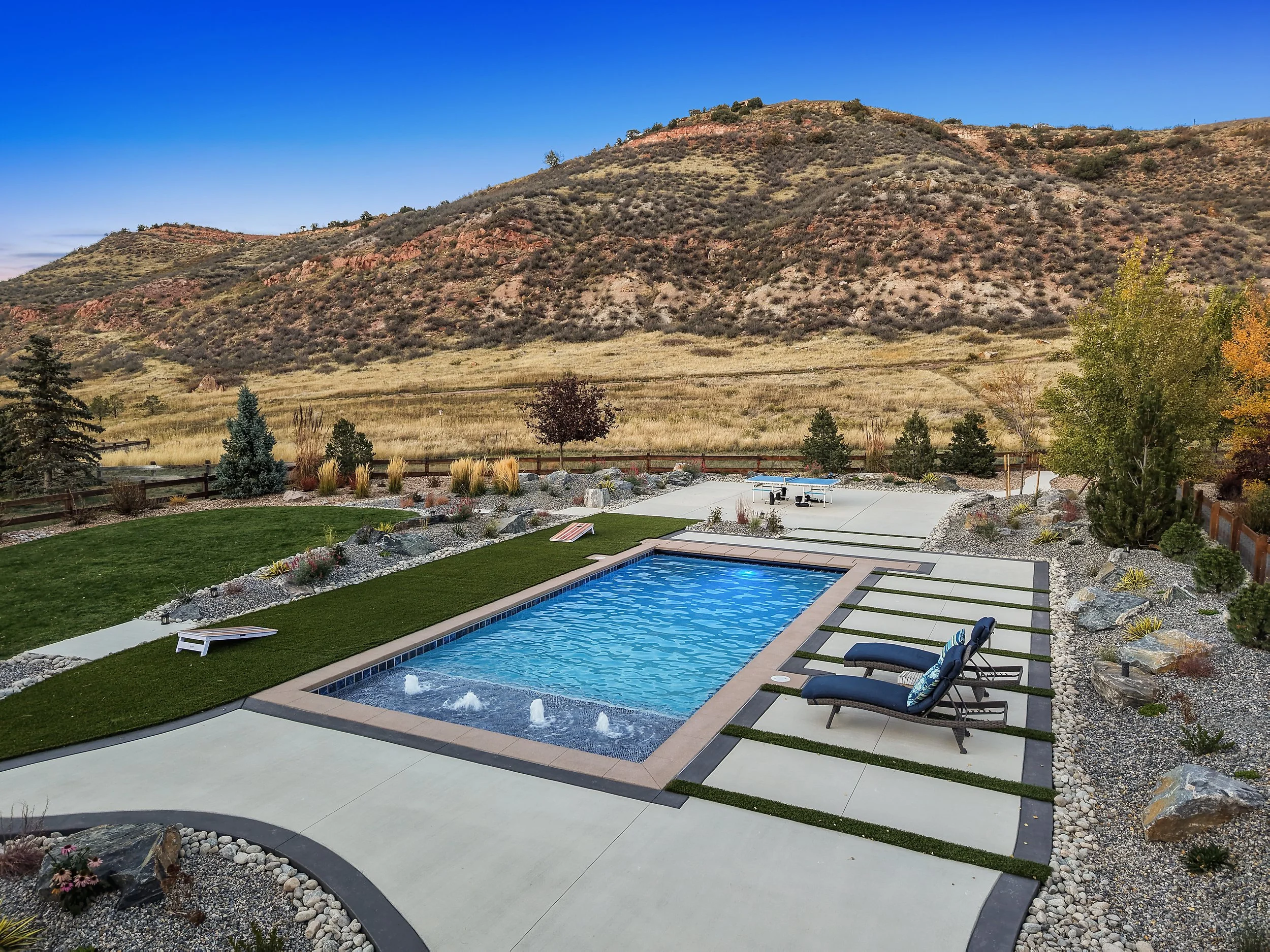
Most landscape design inspiration comes from regions with conditions Colorado does not have. Mature canopy trees that shade the entire backyard. Rich, loamy soil. Reliable rainfall that keeps everything green without irrigation. Lush perennial beds that bloom from May through October without intervention.
The Front Range has none of that. The native conditions are semi arid, the soil is heavy clay or rocky gravel depending on the location, the rainfall averages 15 inches a year, and the sun at altitude is intense enough to fade fabrics, bake stone, and stress any plant that was selected for an Eastern climate. A landscape design built from inspiration without translation produces a property that fights the environment every day.
A landscape design built for Colorado works with the conditions instead. It uses plants that have evolved for this climate. It manages water as a finite resource. It positions hardscape and shade structures to create the microclimates that the property needs. And it produces a result that thrives without the constant intervention that imported designs require.
Related: 6 Ways Patios and Landscape Design Work Together for Better Outdoor Living in Boulder, CO
What the Designer Should Be Reading on the Site
Every property in this region presents a specific set of conditions. The landscape design begins with reading them.
The site assessment identifies:
The microclimates created by the home, the existing vegetation, and the slope, which can produce hot, dry zones on south and west exposures and cooler, more sheltered zones on the north side of the house
The soil composition, which across the Front Range varies from expansive clay in the lower elevations to rocky, decomposed granite at higher elevations, each requiring different preparation and plant selection
The drainage patterns, both surface and subsurface, that determine where water collects, where it moves through, and where the landscape will struggle without intervention
The wind exposure, which on the Front Range can be persistent enough to affect plant selection, fence and structure engineering, and the placement of fire features
The views worth framing and the views worth screening, because the relationship between the property and the surrounding landscape is part of what makes the design feel anchored to its setting
These observations shape the design from the start. A plan developed without them produces decisions that conflict with the conditions on the property.
Related: Landscape Design and Pergola in Boulder, CO & Arvada, CO: Transform Your Outdoors
Why the Plant Palette Defines the Long-Term Result
The plant selection in a Colorado landscape design is not decorative. It is structural. The species that thrive here, native shrubs, ornamental grasses, drought-tolerant perennials, and regionally adapted trees, perform through the seasons without the irrigation demands and replacement cycles that exotic plantings require. They establish faster. They survive the winters. And they look more authentic in the setting than imported species ever will.
A landscape design that builds the planting plan around regionally appropriate species creates a property that improves over time. One that fills the beds with selections that struggle in this climate produces a yard that needs constant intervention to look acceptable.
If you are planning a project in Golden, Boulder, or the surrounding communities, the design conversation should start with the site, not the wish list. The properties that look the most natural here are the ones designed for the conditions that exist, not the conditions someone wishes existed. That is where the work begins.